Roland at Roncesvalles: history and legend
In 778 an officer died with Charlemagne’s rearguard in the Pyrenees. Einhard, the king’s biographer, gives us his name: Roland. The horn that pilgrims associate with the pass at Ibañeta belongs to a much later telling. Between the officer and the hero lies the work of a poet.

Published on
What Charlemagne’s biographer recorded
In chapter nine of his Life of Charlemagne, Einhard explains the defeat through the shape of the terrain. On the return from an expedition into Spain, the Frankish column had to stretch out in single file. Basque attackers waiting above could strike the baggage train and its escort. Heavy equipment that might have served the Franks on level ground counted against them here.
Einhard lists Roland among the dead and gives his command on the Breton frontier. The entry is brief. Charlemagne’s biographer is trying to explain how so powerful an army lost the men at the back. For the knight raising the horn to his lips, we have to open another book.
Why an epic needs a horn
The exhibition centre in Luzaide/Valcarlos dates the Song of Roland to the late eleventh century. The poem casts the enemy as Saracens. The decision that matters now is Roland’s delay in sounding his horn until help can no longer reach him in time. Terrain explained the vulnerability of many men in the earlier account. The poet gives an audience the courage and pride of one man to argue over.
Can you stand on the battlefield?
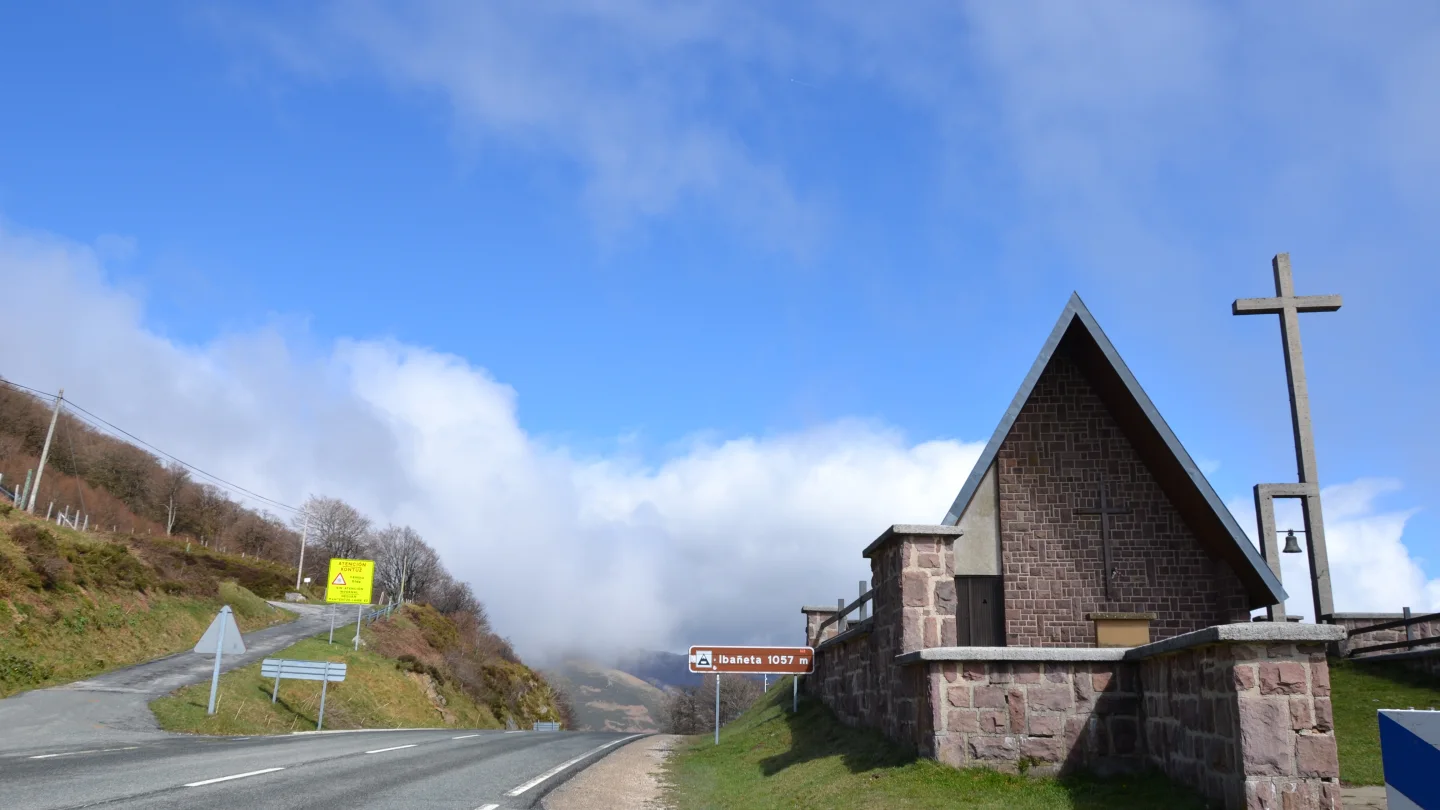
The collegiate church at Roncesvalles draws a careful distinction. Local tradition places the sounding of the horn on the height of Ibañeta; the precise site of the fighting remains uncertain. The institution also records quite another date. In 1127 the bishop of Pamplona established a fraternity of clergy and laypeople to look after pilgrims here. By then the crossing had a documented place in the history of hospitality as well as a place in an epic.
The collegiate church on the pass and the pilgrims’ hospital
Two places to mark at the end of the stage
On the first stage map look for Roncesvalles, also called Orreaga. The exhibition about 778 is in Luzaide/Valcarlos. The collegiate church at Roncesvalles tells the story of caring for people who crossed the mountains. Marking them separately keeps a stage finish, a museum and an uncertain battlefield from collapsing into a single pin.
If you are planning the crossing, check the winter route via Valcarlos before choosing your ascent.
Saint-Jean to Roncesvalles: the winter crossing via Valcarlos
Before you go
- Read chapter nine alongside the epic tradition.
- Locate Luzaide/Valcarlos and Orreaga/Roncesvalles separately.
Walks in this guide
These distances are for the whole walk. Open a route to see which stages you’d like to walk.
- Camino Frances
- Distance
- 784.5 km
- Stages
- 32 stages