Why does the English Way begin in Galicia?
In Santiago there is a wooden altarpiece with alabaster figures, given in 1456 by a parish priest from the Isle of Wight. We know his name, John Goodyear, and even the colours on the figures. His gift leaves one question open: where did he come ashore? The sea crossing is the part of the English Way a walking map leaves out.

Published on
One name for two ports
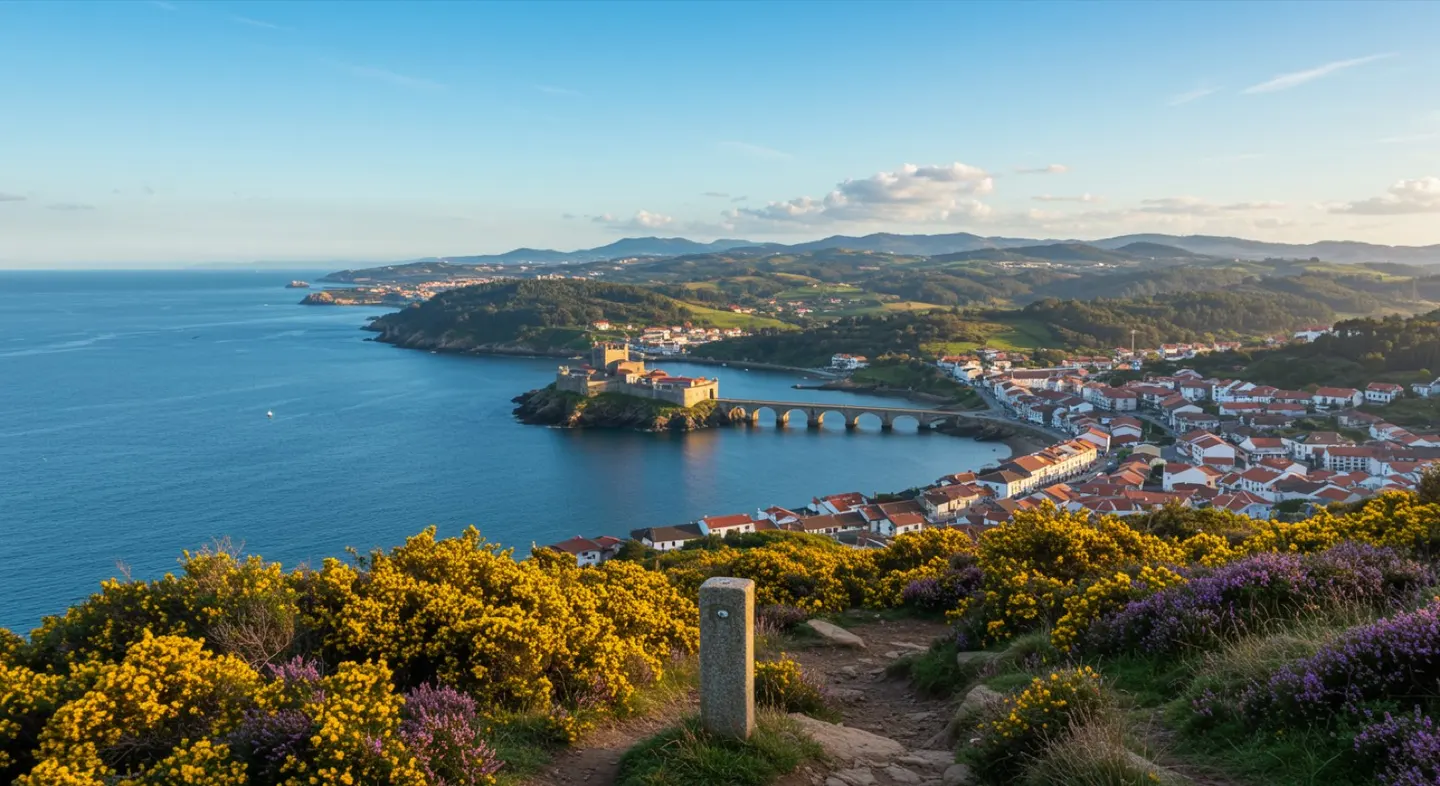
The coast of what is now A Coruña province received travellers from northern Europe, many of them English. Where people embarked depended on the port they could reach from home. Once ashore they continued on foot to Santiago. The word English preserves the importance of that traffic without identifying every passenger as English.
Put the two modern route maps side by side. The Ferrol and A Coruña branches begin at different points of access from the sea and meet inland near Hospital de Bruma. Think of two ships coming to land before thinking of two walkers choosing a starting point, and the shape of the route makes more sense.
A gate in A Coruña and a bridge at Pontedeume
In A Coruña the name O Parrote survives. The Xunta de Galicia connects the old landing place with the gate in the town wall. The gate is still a reference point on the walk, although the old port has disappeared. On the Ferrol branch there is a different trace. At Pontedeume a small pilgrims’ hospital once stood on the bridge. It too has gone.
The two places ask different things of a visitor. At one, a name preserves the way people once entered a town. At the other, the history of the crossing tells us about a service a medieval traveller could find there. On both walks part of what made the route work has vanished from sight.
What John Goodyear carried to Santiago
John Goodyear, parish priest of Chale on the Isle of Wight, gave Santiago Cathedral an altarpiece showing scenes from the life of Saint James. The museum’s object record points to the entry in the cathedral register known as Tumbo F, which dates the gift to 1456. The record describes wood, alabaster figures, and decoration in gold and blue. A surviving object and a written entry attach a name to a journey.
This is unusually precise evidence for one English pilgrim. It gives us no grounds to select a Galician landing port for him. The limits of the document are quite as interesting as the details it preserves.
Which beginning tells which story?
Starting in Ferrol takes you towards Neda and the bridge at Pontedeume. A Coruña lets you follow the passage from the old landing place to the city gate. Near Bruma the branches join. The cathedral register picks up Goodyear’s story at its destination, leaving the choice of port open.
Before you go
- Locate both ports before choosing a start.
- Look for Goodyear’s name in the cathedral’s altarpiece record.
Walks in this guide
These distances are for the whole walk. Open a route to see which stages you’d like to walk.
- Camino Inglés (Ferrol)
- Distance
- 111.3 km
- Stages
- 6 stages
- Camino Inglés (A Coruña)
- Distance
- 72.9 km
- Stages
- 4 stages