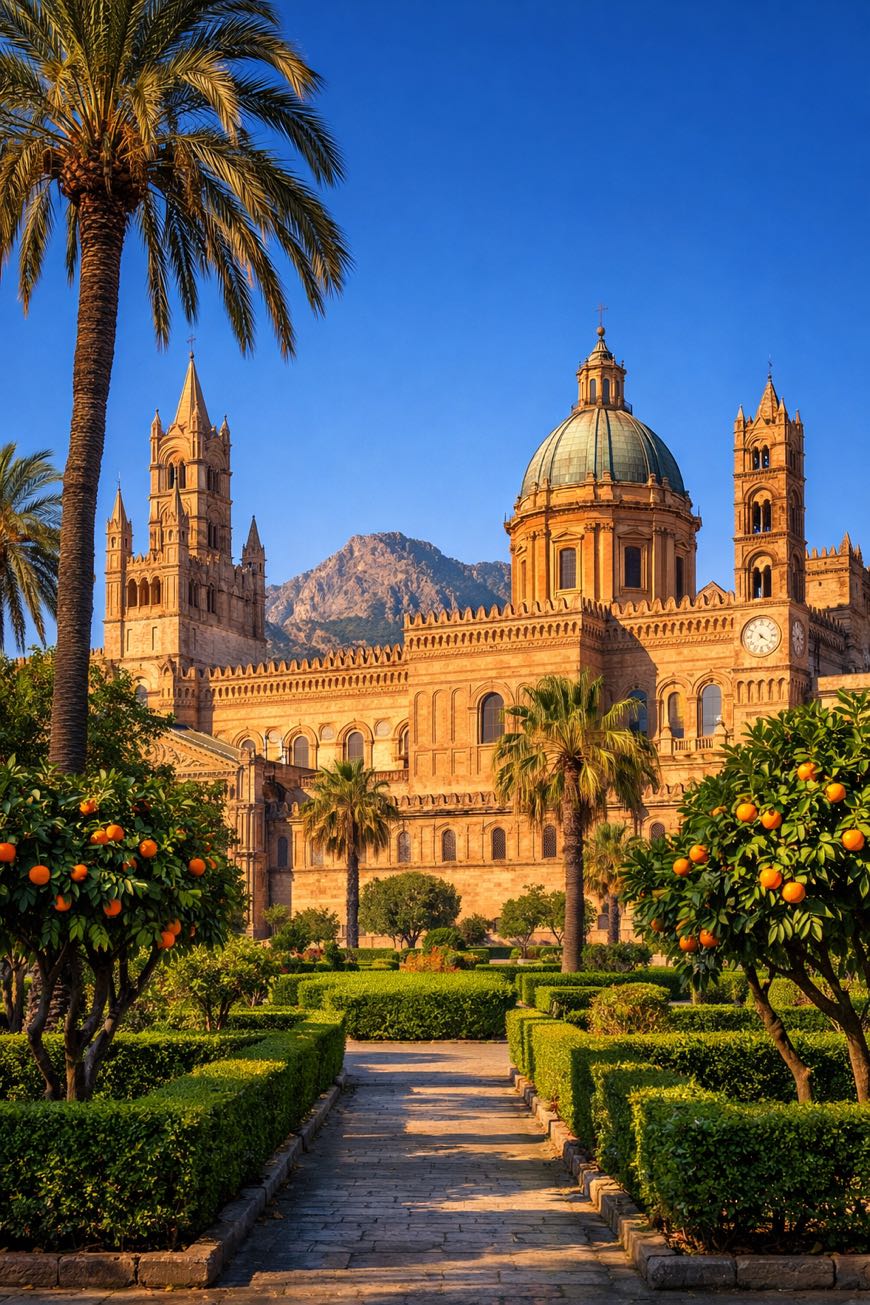
Magna Via Francigena
Sicilia, Italy
Italy · Palermo, Italy → Agrigento, Italy
Distance
188 km
Stages
9
Difficulty
moderate
Best months
Apr-Jun, Sep-Oct
Magna Via Francigena · Stages and distances
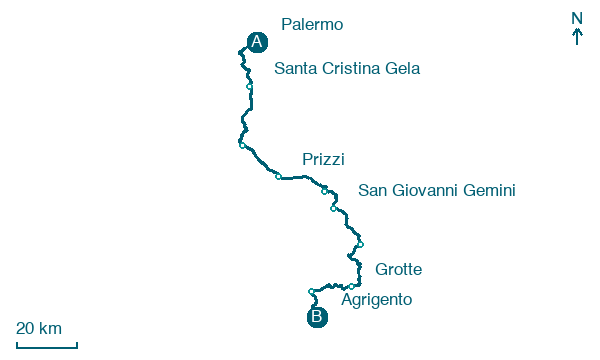
Walking distances for Appy’s stages (9)
| Stage | km |
|---|---|
| 1. Palermo → Santa Cristina Gela | 25.3 |
| 2. Santa Cristina Gela → Corleone | 26.4 |
| 3. Corleone → Prizzi | 20.1 |
| 4. Prizzi → Castronovo di Sicilia | 24.4 |
| 5. Castronovo di Sicilia → San Giovanni Gemini | 12.5 |
| 6. San Giovanni Gemini → Sutera | 18.6 |
| 7. Sutera → Grotte | 26.9 |
| 8. Grotte → Joppolo Giancaxio | 19.9 |
| 9. Joppolo Giancaxio → Agrigento | 13.7 |
| Total | 187.8 |
About
About 190 kilometers of Sicilian soul, from Palermo’s bustling streets to Agrigento’s ancient temples. The Magna Via Francigena unfolds in nine stages, each revealing a of olive groves, coastal vistas, and medieval architecture.
Feel the warmth of sun-baked stones beneath your fingers as you traverse this cultural route. Encounter the grandeur of the Valley of the Temples, a UNESCO site, and the intricate mosaics of Monreale.
Suitable for all, it’s a week-long journey through history, flavor, and the essence of Sicily.
Stages
9 stages
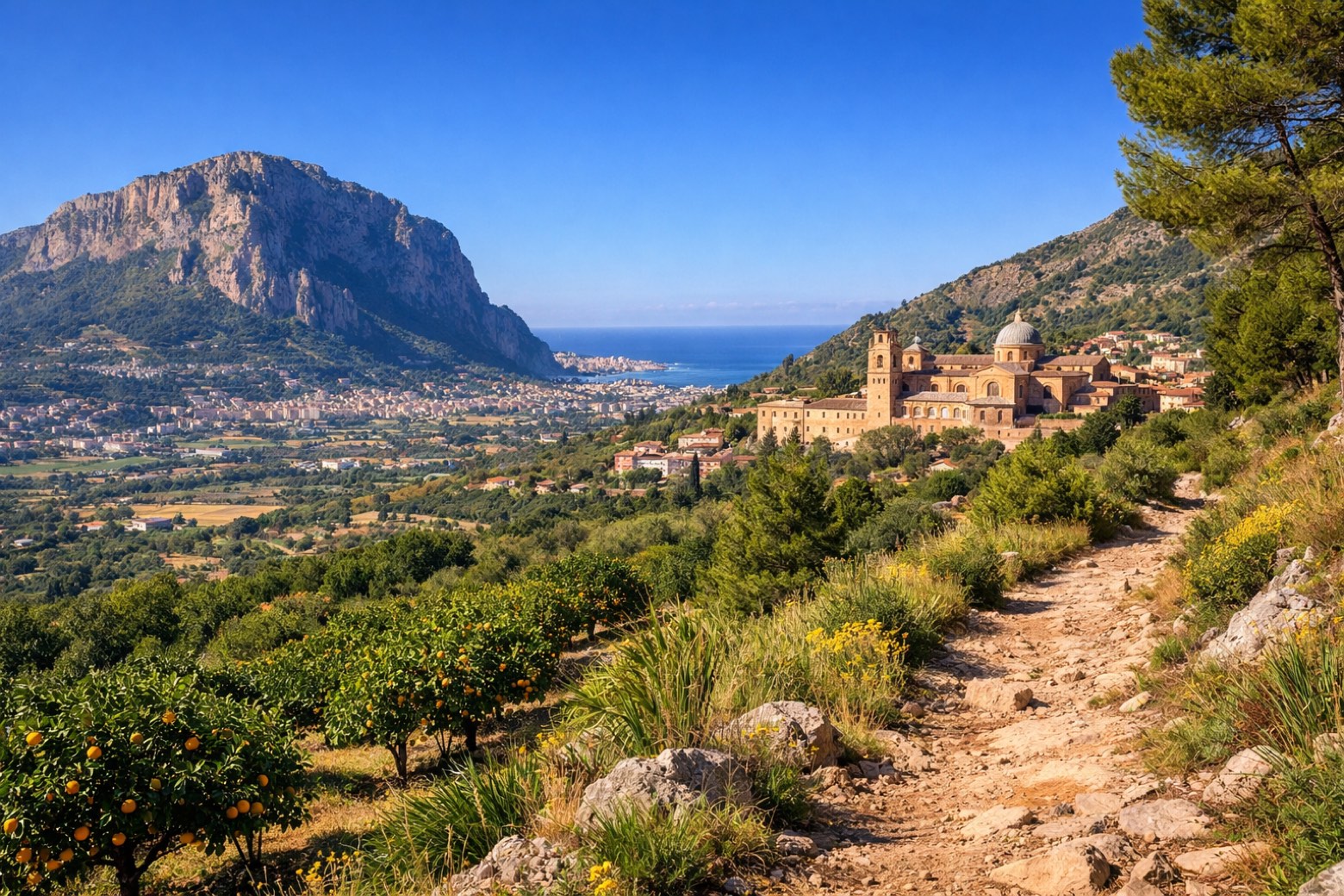 Stage 1
Palermo → Santa Cristina Gela
moderate- Distance
- 25 km
- Ascent
- 940 m
- Descent
- 373 m
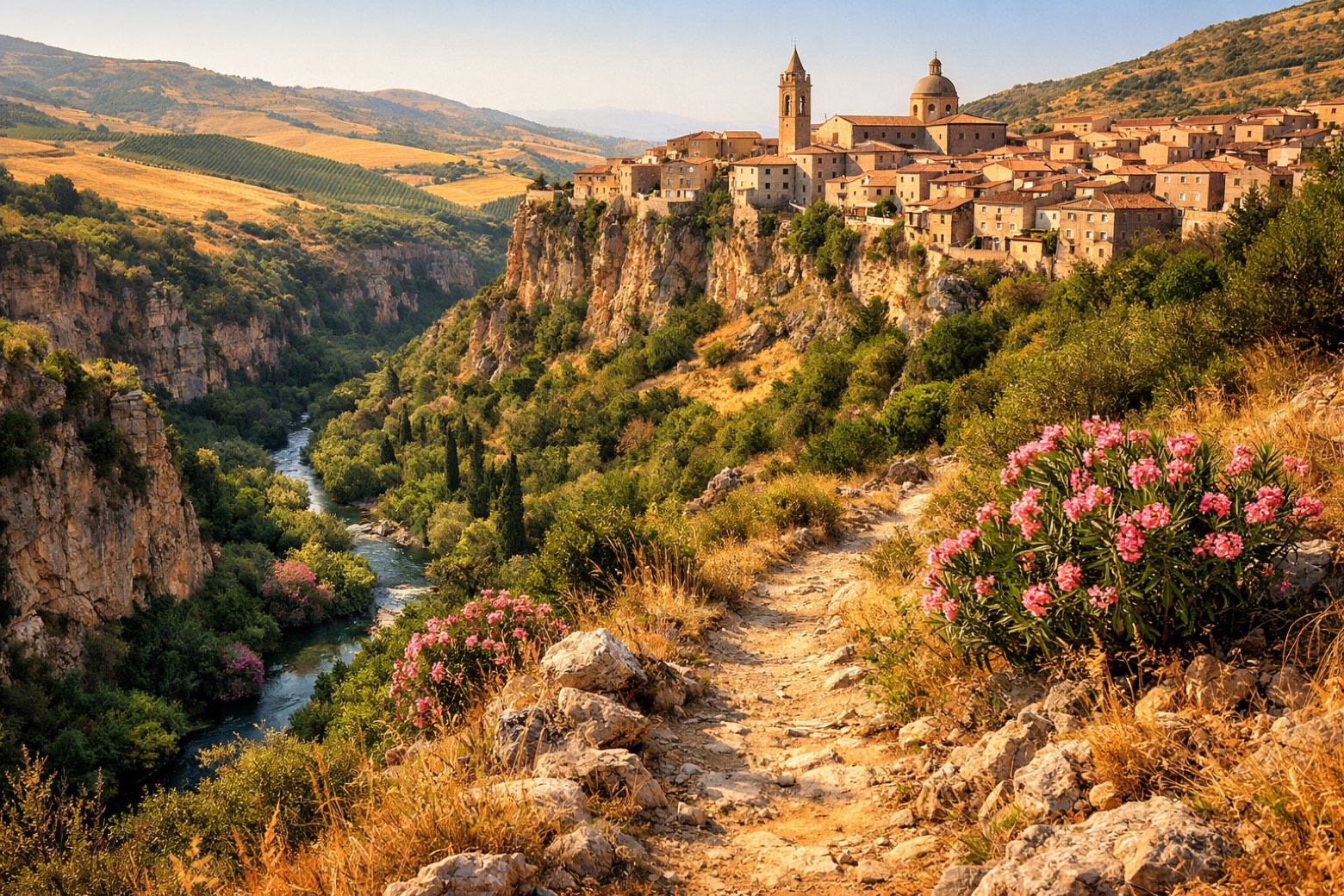 Stage 2
Santa Cristina Gela → Corleone
moderate- Distance
- 26 km
- Ascent
- 648 m
- Descent
- 761 m
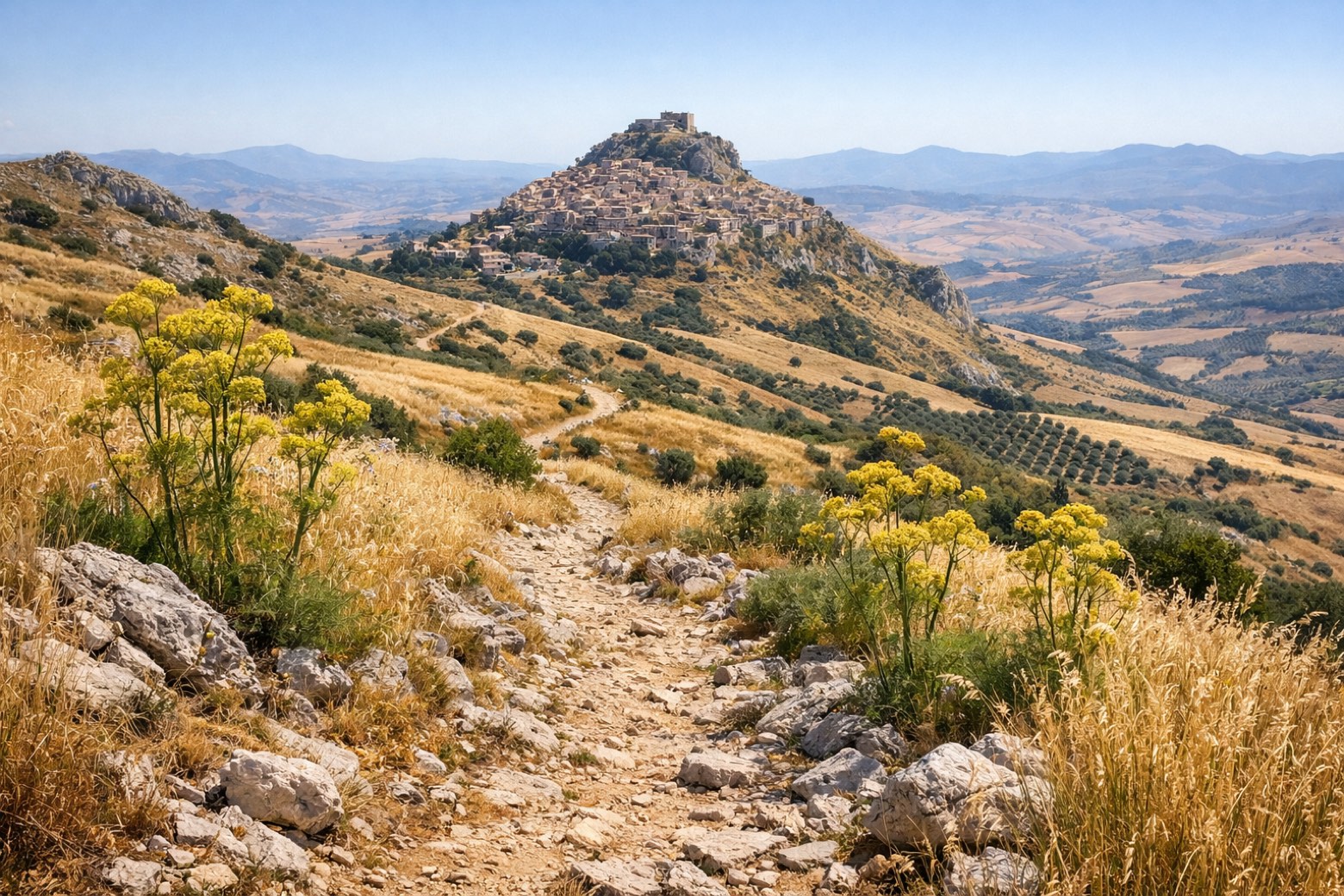 Stage 3
Corleone → Prizzi
moderate- Distance
- 20 km
- Ascent
- 733 m
- Descent
- 343 m
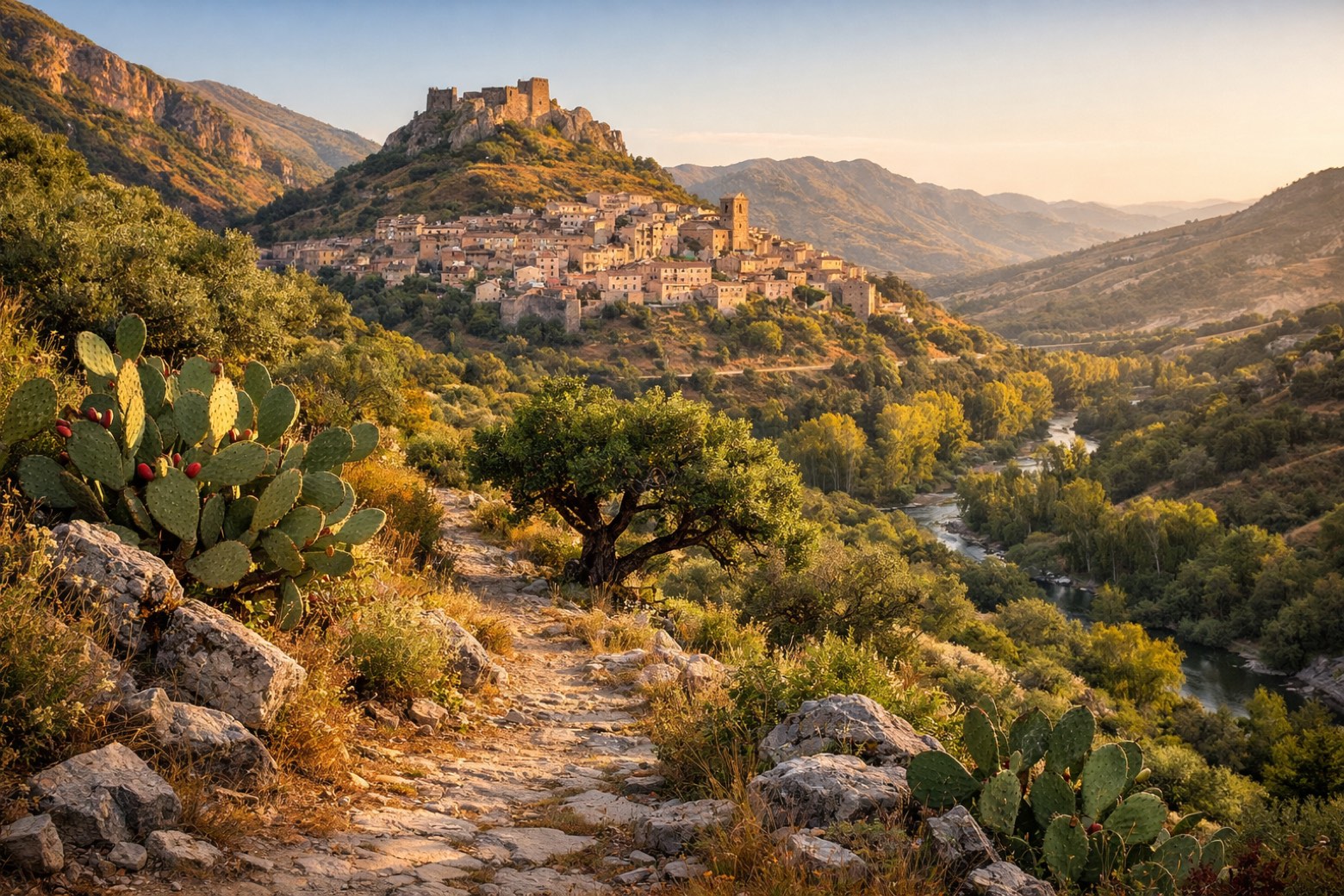 Stage 4
Prizzi → Castronovo di Sicilia
moderate- Distance
- 24 km
- Ascent
- 492 m
- Descent
- 764 m
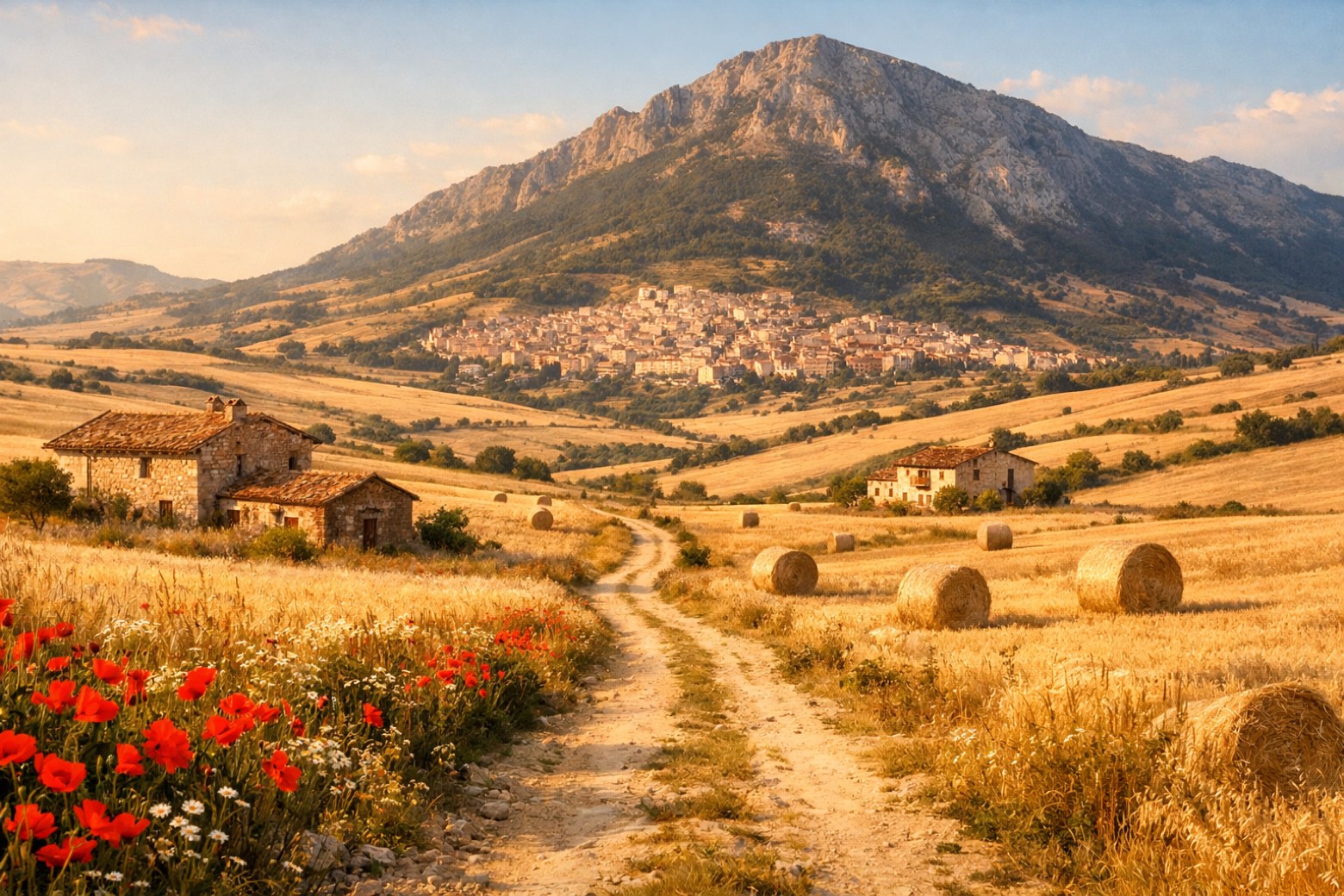 Stage 5
- Distance
- 12 km
- Ascent
- 555 m
- Descent
- 510 m
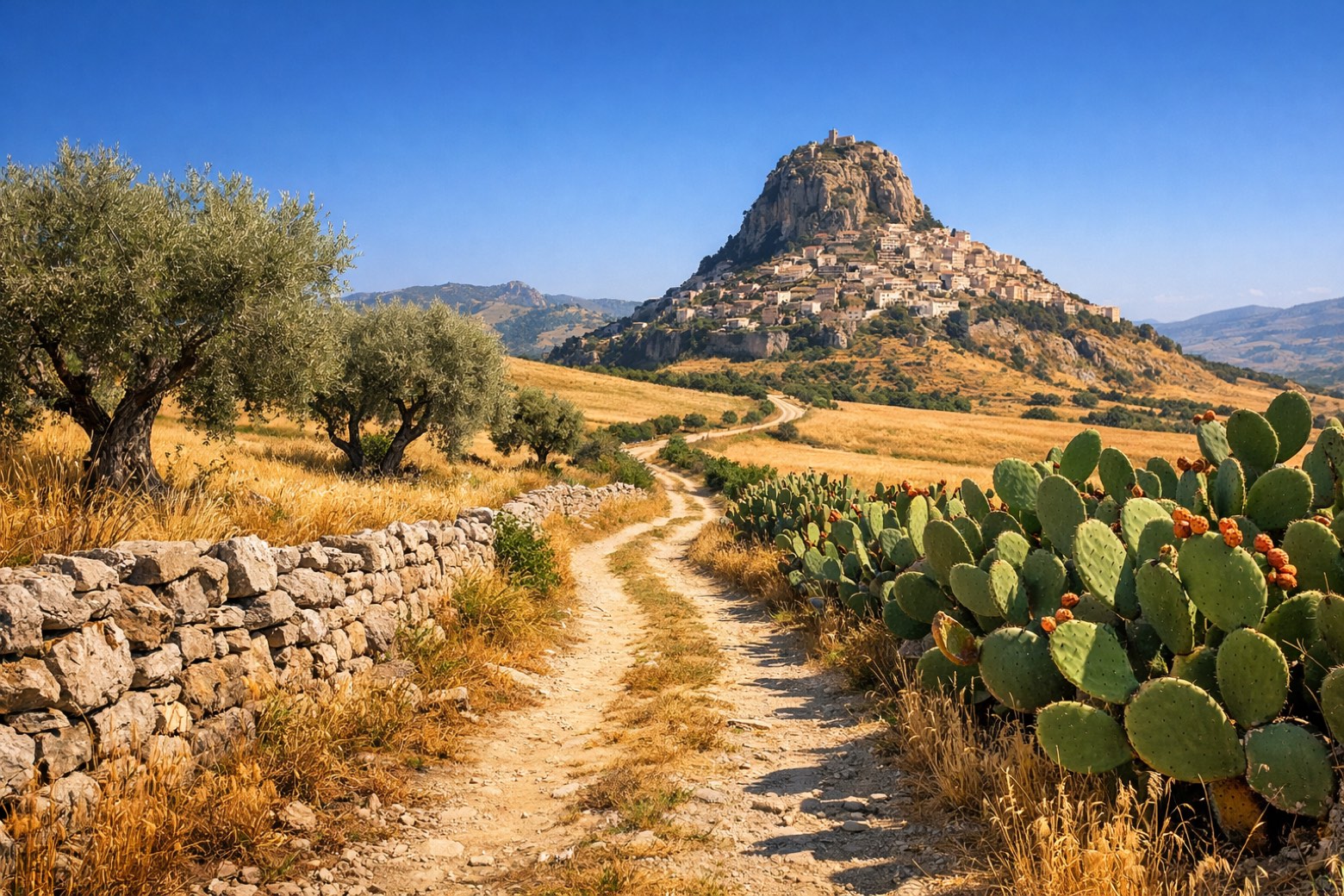 Stage 6
San Giovanni Gemini → Sutera
moderate- Distance
- 19 km
- Ascent
- 739 m
- Descent
- 771 m
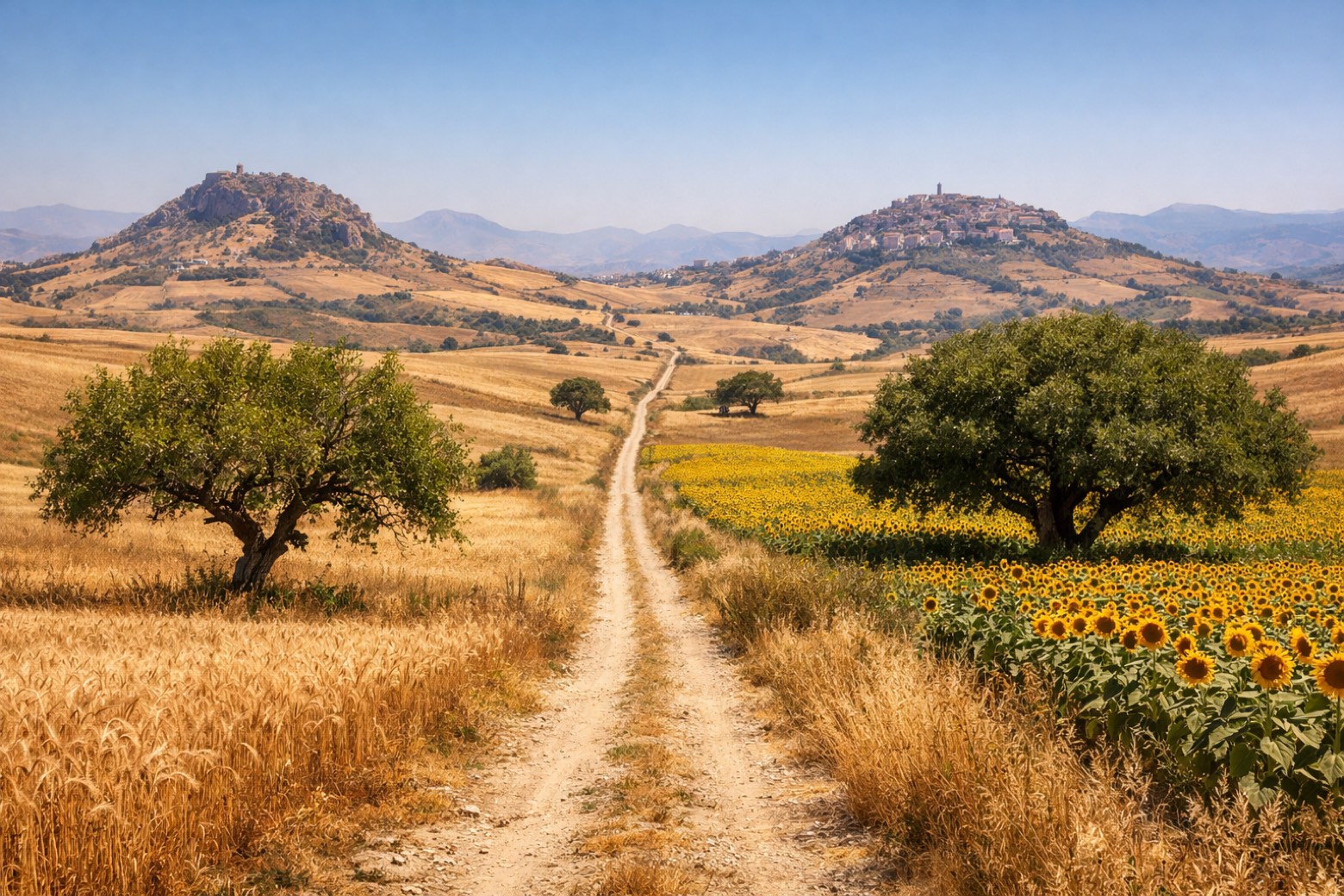 Stage 7
Sutera → Grotte
moderate- Distance
- 27 km
- Ascent
- 699 m
- Descent
- 780 m
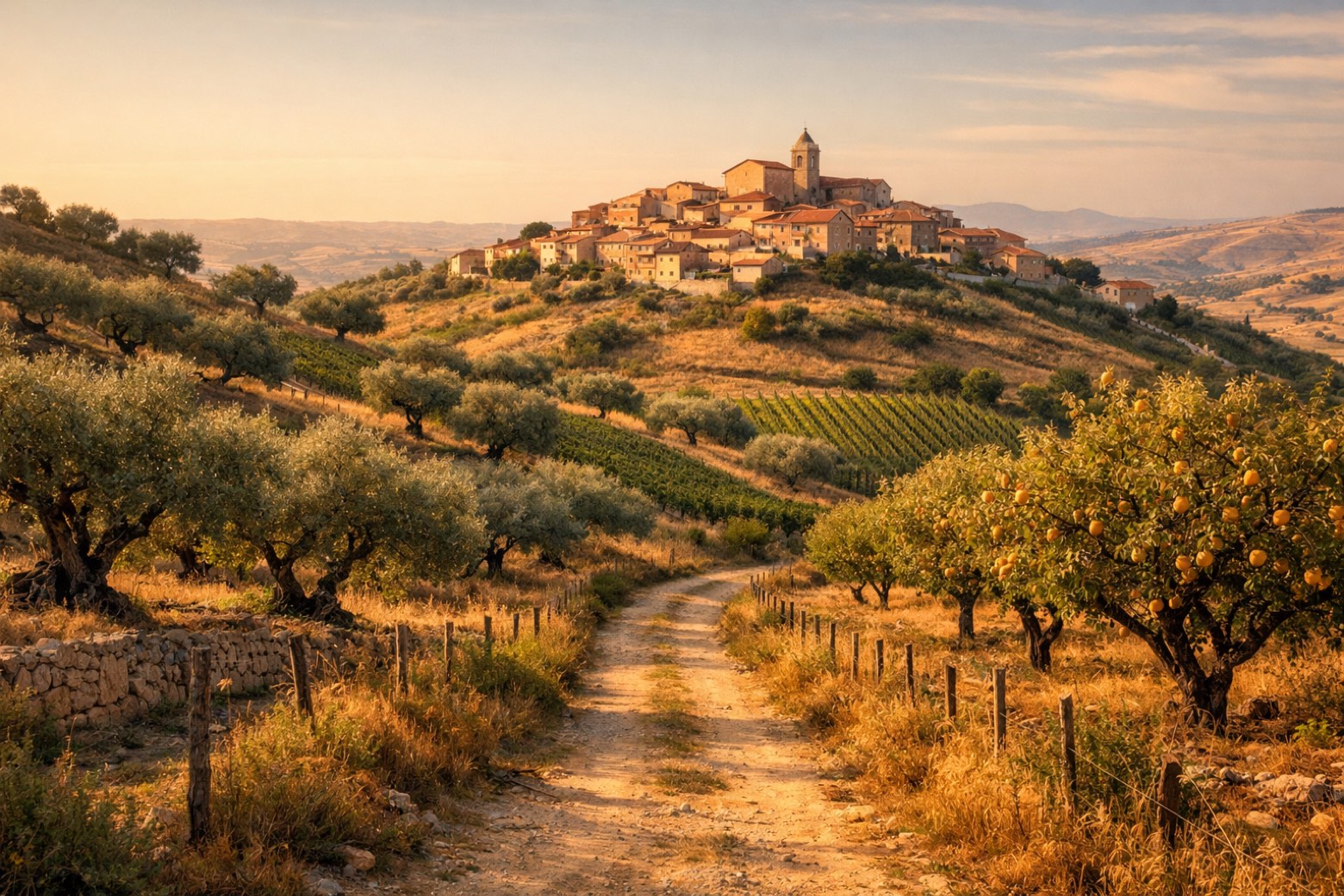 Stage 8
Grotte → Joppolo Giancaxio
moderate- Distance
- 20 km
- Ascent
- 475 m
- Descent
- 706 m
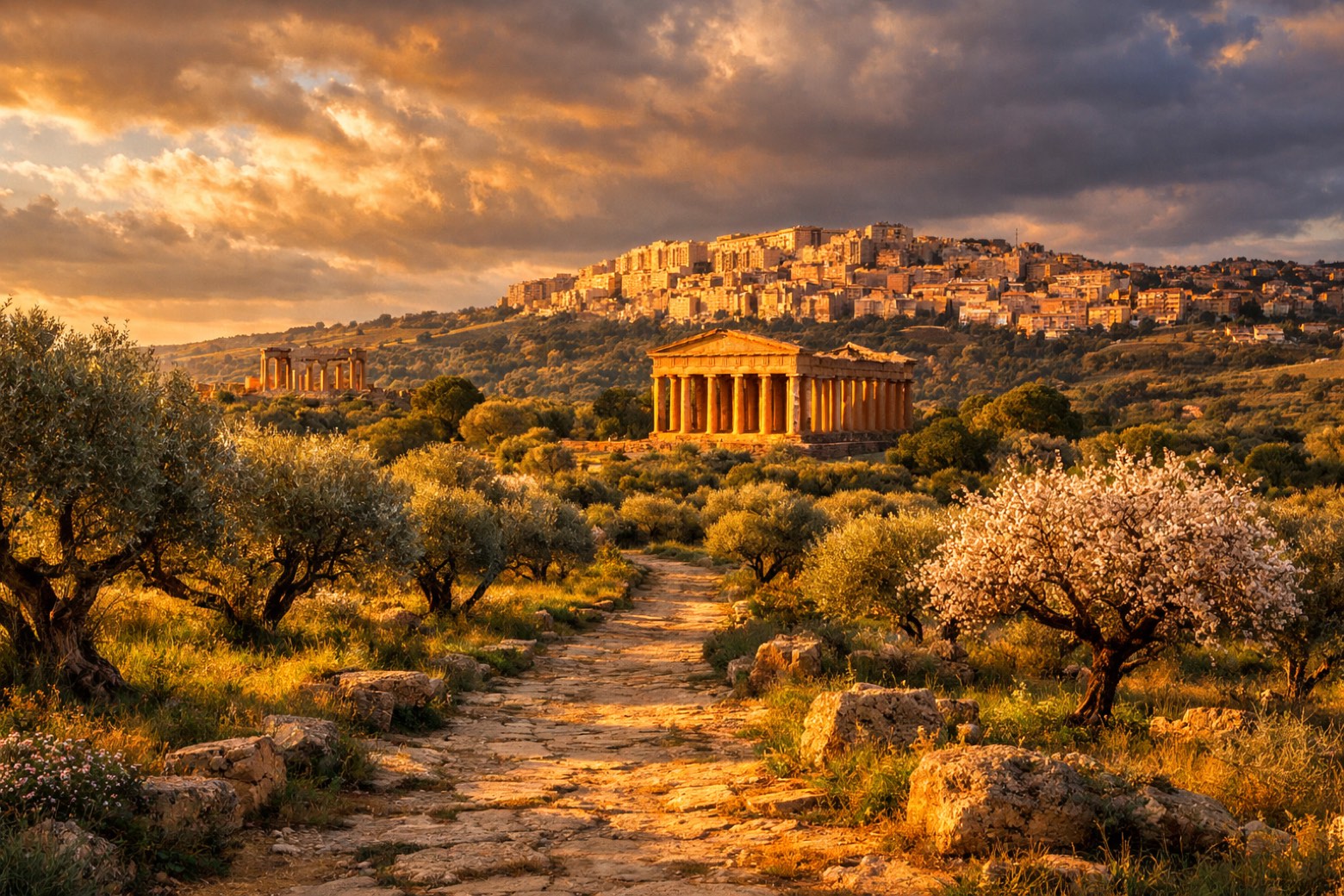 Stage 9
Joppolo Giancaxio → Agrigento
moderate- Distance
- 14 km
- Ascent
- 333 m
- Descent
- 296 m
Points of interest
- Santa Maria Addolorata
Seventeenth-century church built over an older one, perched on a limestone cliff with its apse partly cut into the rock.
- Monastero di Sant’Angelo di Prizzi
Monastery of Sant’Angelo di Prizzi. 12th-century monastery, in Prizzi, Italy.
- Corleone Castle
Ruined castle on a rocky spur above the town: the walls have collapsed, but a round tower topped by a dry-stone dome still stands.
- Ponte dell'Ammiraglio
The entire structure is made of cut stone, blocks of calcarenite, supporting two opposing ramps, with a donkey-back shape.
- S. Caterina d'Alessandria
The structure consists of a continuous load-bearing wall of homogeneous type, made with squared blocks of calcarenite.
- Padiglione Villa Garibaldi
building in continuous masonry with a simple roof covering
- Chiesa di Santa Maria di Portosalvo
Building in continuous masonry with vaults on the ground floor, floors on the first floor, roof covering and flat roof
- Southeast Building
rectangular building in load-bearing masonry with traces of cross vaults and flat roof except for the diaconal dome and the short barrel section near the diaconal
Travel
Find connections for your cammino.
Search trainsMore walks in Italy
Plan your walking trip
All articles and guidesHow to choose a walking route: stages, days and ascent
How many days can you actually spend walking? Start there, then choose stages that leave you time to stop along the way.
How to plan a walking trip by train and bus
Two different stations, a last bus and a backpack. Fit the journeys out and home around the days you want to spend walking.
Take your walk with you: download Appy
Magna Via Francigena. Explore maps, stages and elevation in the app, and plan your train or bus journey.