Cremona What to see beyond the violin
Piazza del Comune brings the Torrazzo, cathedral and arcades together. A short walk leads to violin makers’ workshops and shop windows filled with torrone.
Getting there
Five places to visit
Cathedral of Santa Maria Assunta
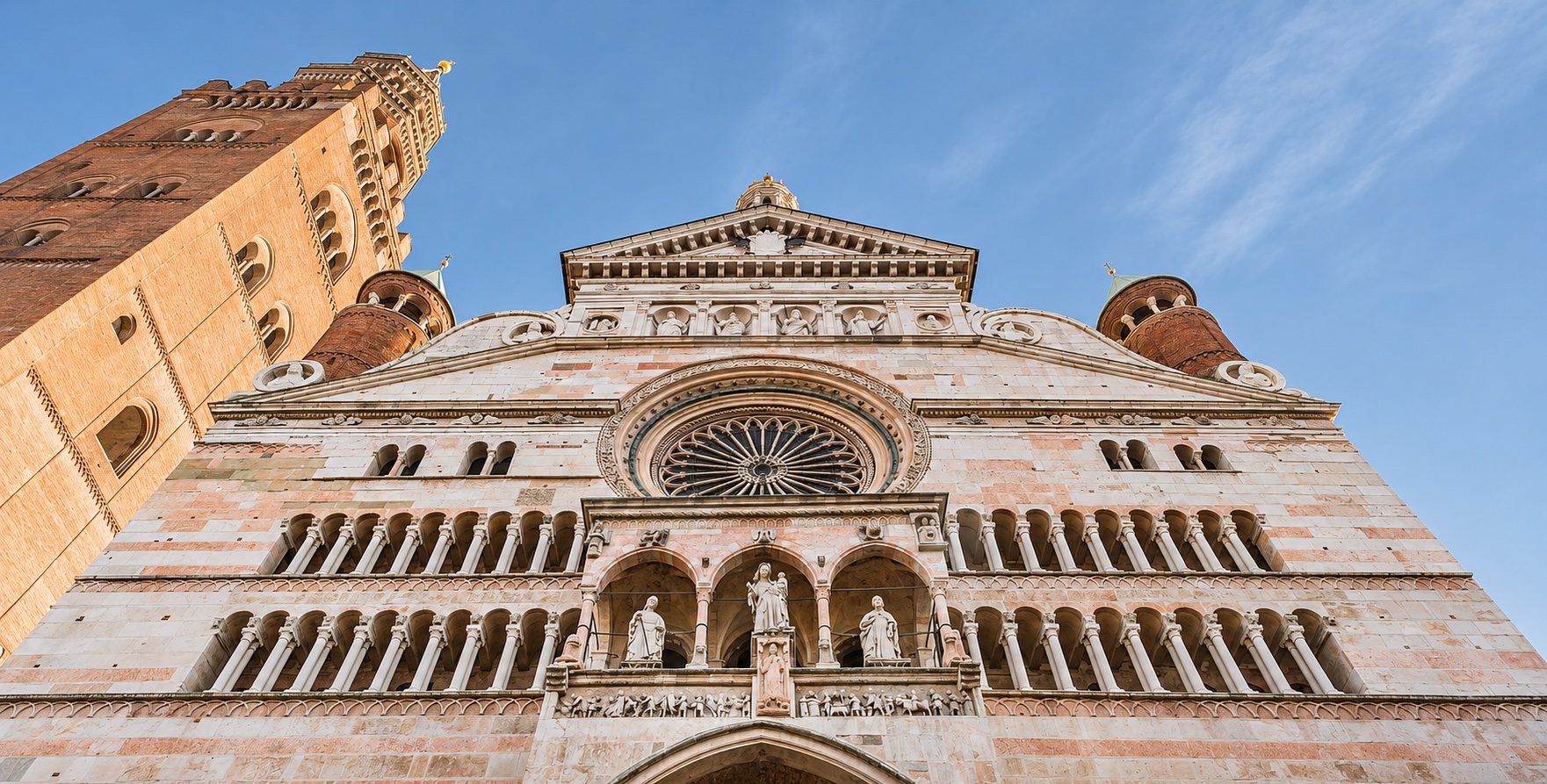
Work on the Cathedral of Santa Maria Assunta began in 1107.
An earthquake interrupted construction ten years later; what you see today took shape through centuries of rebuilding and additions. From the square, find the lions at the entrance, then look up: the rose window, with its 26 slender columns, was made by the master craftsman Jacopo Porrata of Como in 1274. Across from you stands the civic palace: medieval church and town government faced each other here. Check visiting hours if you plan to go inside, and respect services.
Tournasol7 / CC BY-SA 4.0 / AI enhanced
Torrazzo
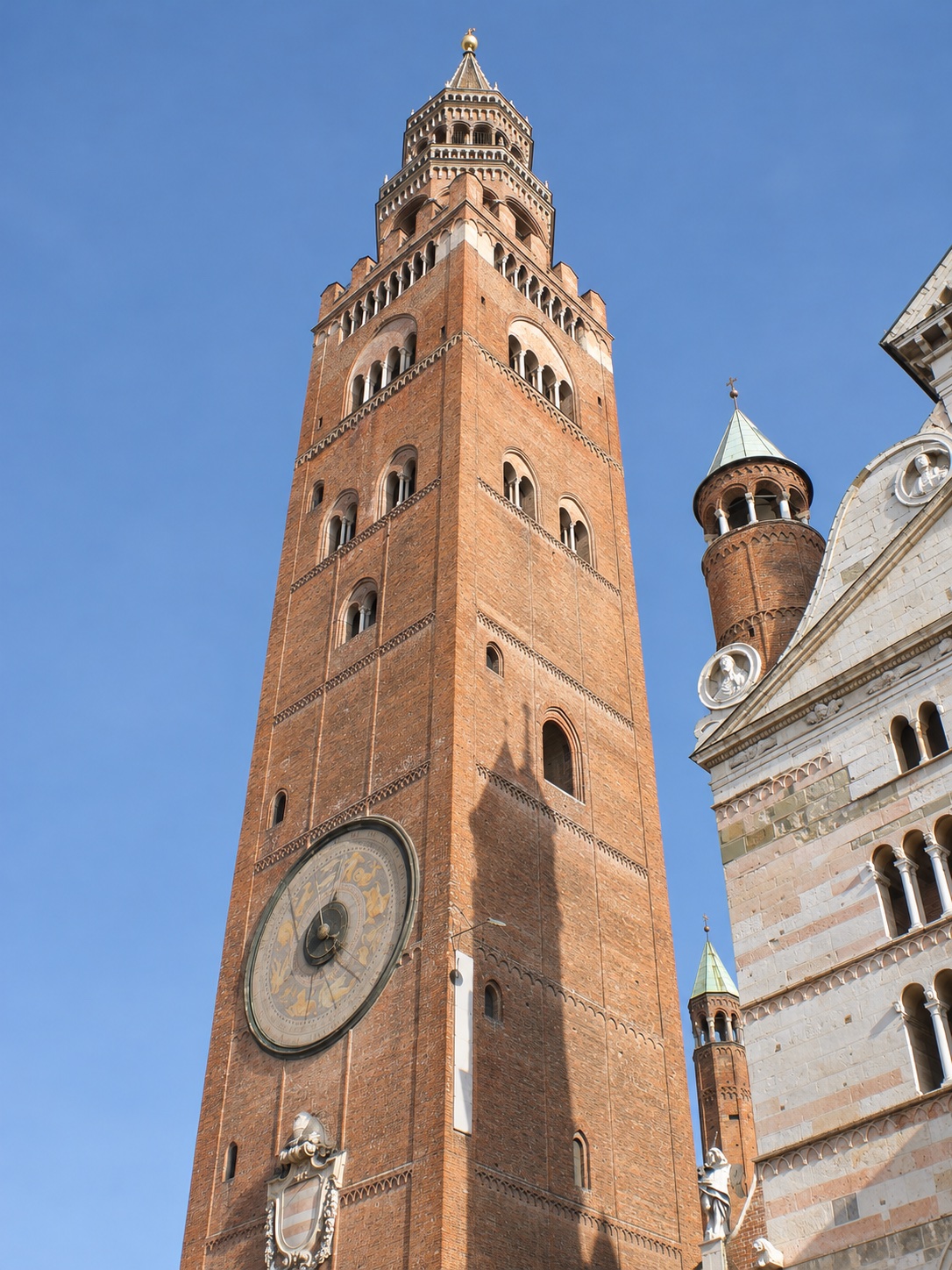
The Torrazzo was the cathedral’s bell tower long before it became a lookout.
Its astronomical clock was made in the 16th century by Giovanni Francesco and Giovanni Battista Divizioli. The dial tells more than the hour: it charts the movements of celestial bodies. Stop to look before you climb. There are 502 steps to the top, while the Vertical Museum inside explores the science of measuring time. Check tickets and access before your visit.
Marcolazzari / CC0 / AI enhanced
Baptistery
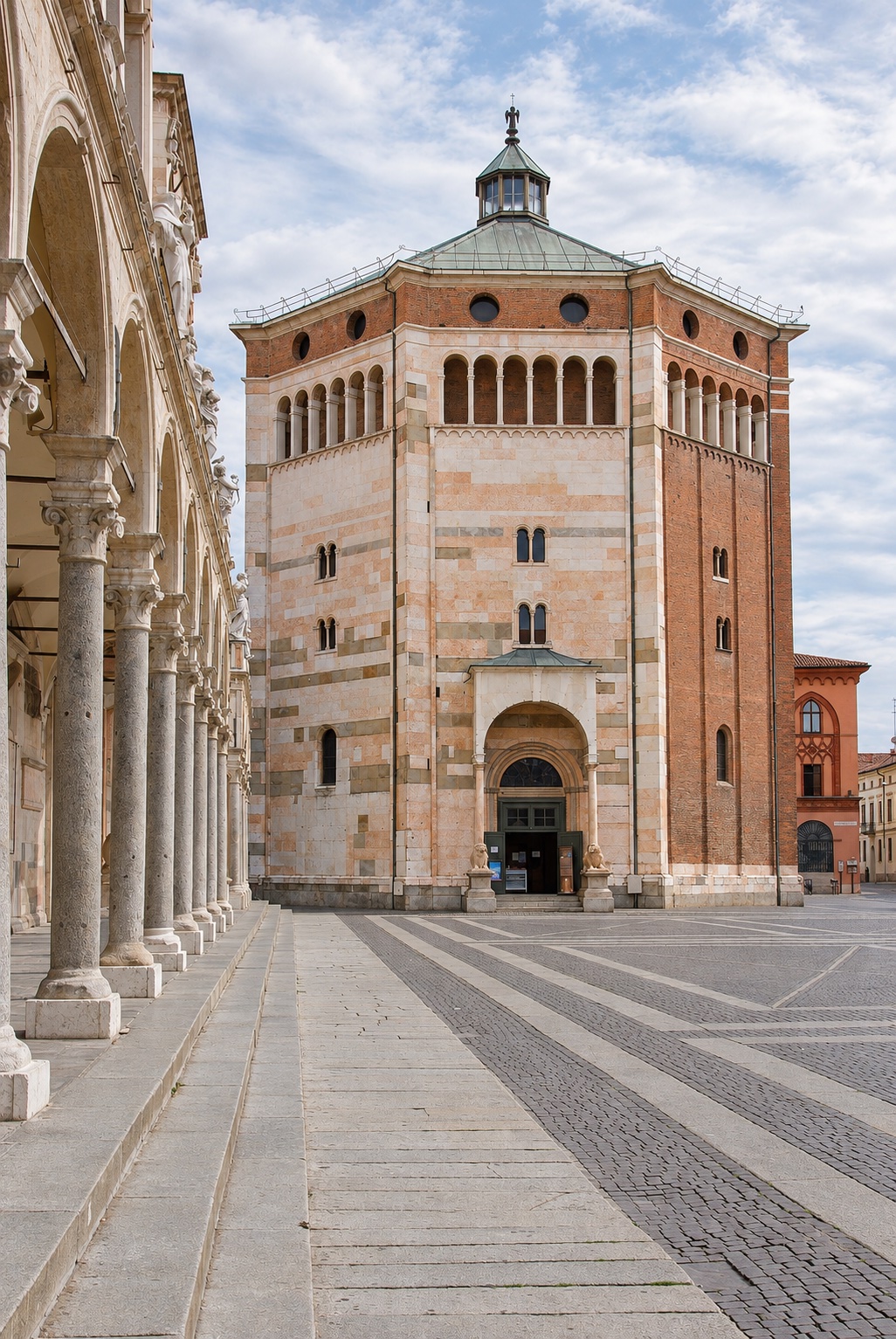
Construction of the baptistery began in 1167.
Its eight-sided plan carries a meaning: in Christian tradition, the eighth day evokes the Resurrection, fitting for a building devoted to baptism. Walk around the outside. Marble facing on some sides was added in the 16th century, long after the Romanesque brick structure. You can spot two periods on one building in a few steps. Check official hours if you want to enter.
Jakub Hałun / CC BY-SA 4.0 / AI enhanced
Palazzo del Comune
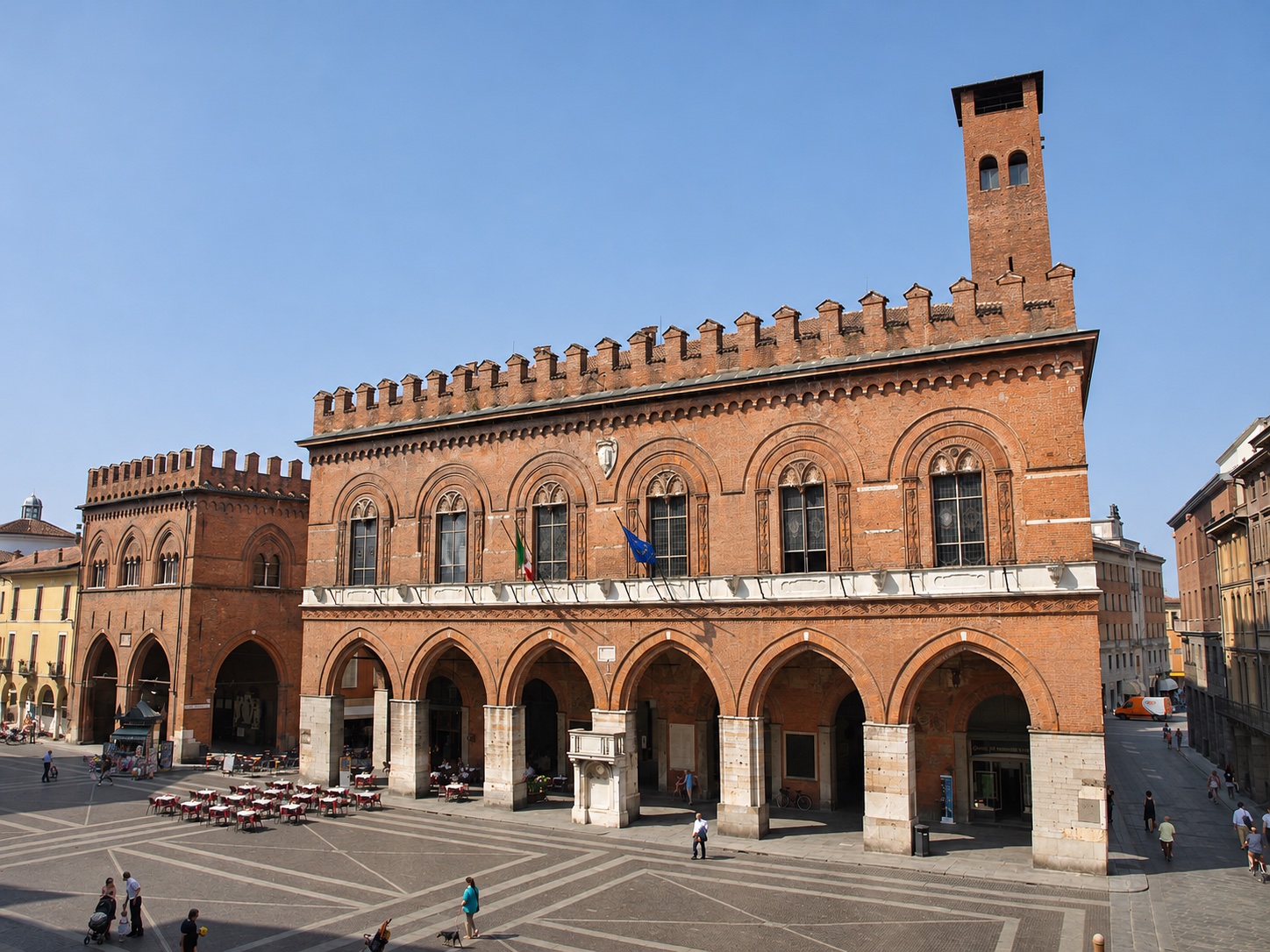
Palazzo del Comune began in 1206 as a broletto, the place where the city met and governed itself.
Its facade is no untouched medieval relic: it changed over the centuries and was reshaped in the 1800s by Cremonese architect Luigi Voghera. Cross the square and look back from the cathedral side to see why civic and religious power shared its centre. The palace still houses city government; check which rooms are open on the day you visit.
Andrewrabbott / CC BY-SA 3.0 / AI enhanced
Loggia dei Militi
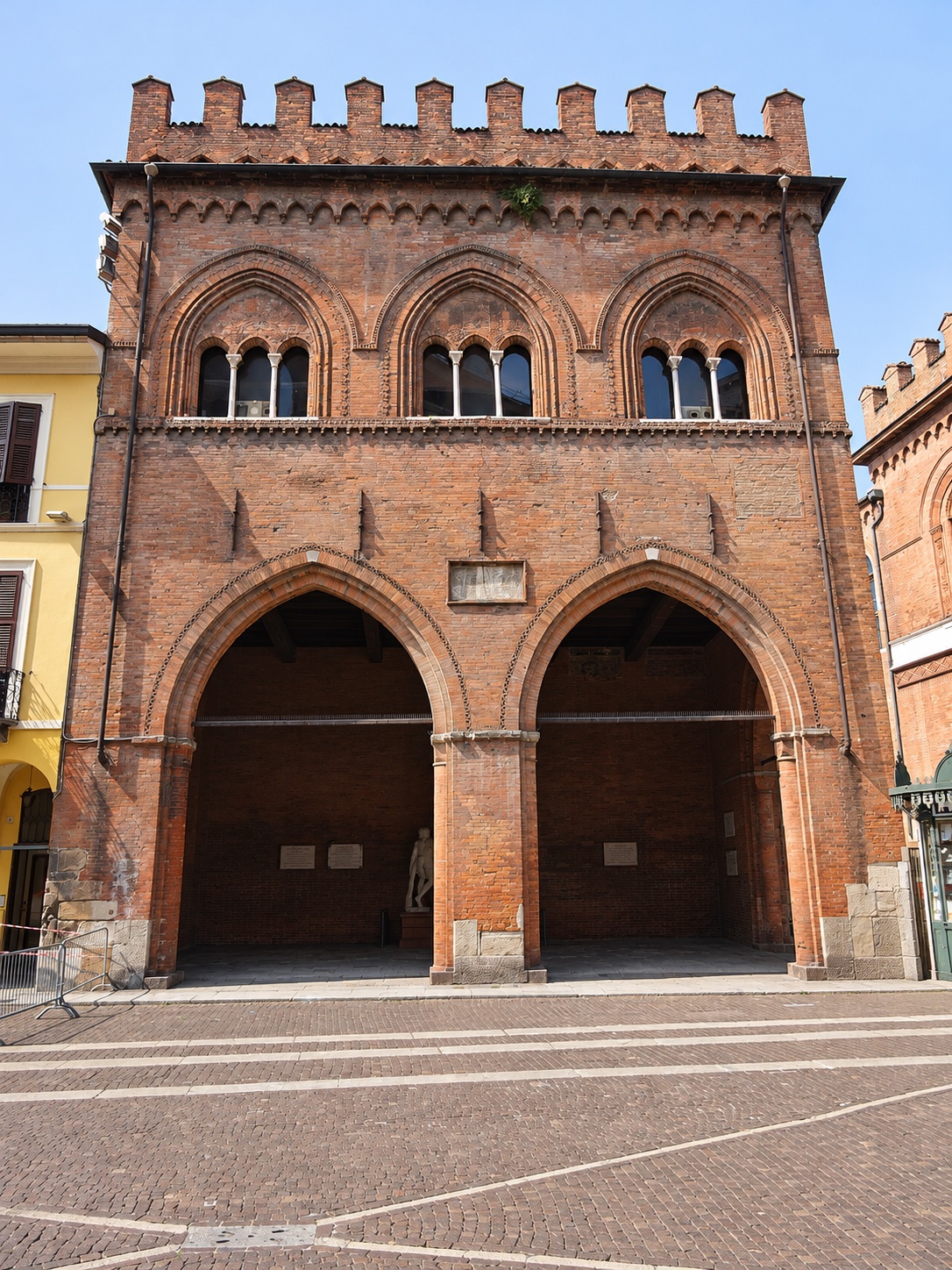
Built in 1292, the Loggia dei Militi housed meetings of the Società dei Militi, an association of the city’s influential families.
Beneath the portico, find its unexpected detail: two figures of Hercules hold Cremona’s coat of arms. Legend names the hero as the city’s founder. The sculpture came from a city gate demolished in the 20th century, so this small stop also carries a trace of the vanished walls.
Riccardo Ortelli / CC BY-SA 4.0 / AI enhanced
Why Cremona is worth the trip
Cremona is easy to explore on foot. In Piazza del Comune, the cathedral and civic palace reveal the medieval balance of religious and civic power.
Nearby workshops tell another story: violin making is still practiced here. Choose one museum and leave time to linger in the square.
Cremona: from the Po to the violin workshop
Founded as a Latin colony in 218 BC, Cremona grew near the Po and the Via Postumia. Its centre retains a medieval layout: Piazza del Comune gathers the cathedral and civic palace.
The Amati and Guarneri families and Antonio Stradivari made Cremona’s violin making famous. UNESCO recognised the craft in 2012. See the instruments at the Museo del Violino, then look for workshops where the tradition continues.
What to eat in Cremona
Torrone
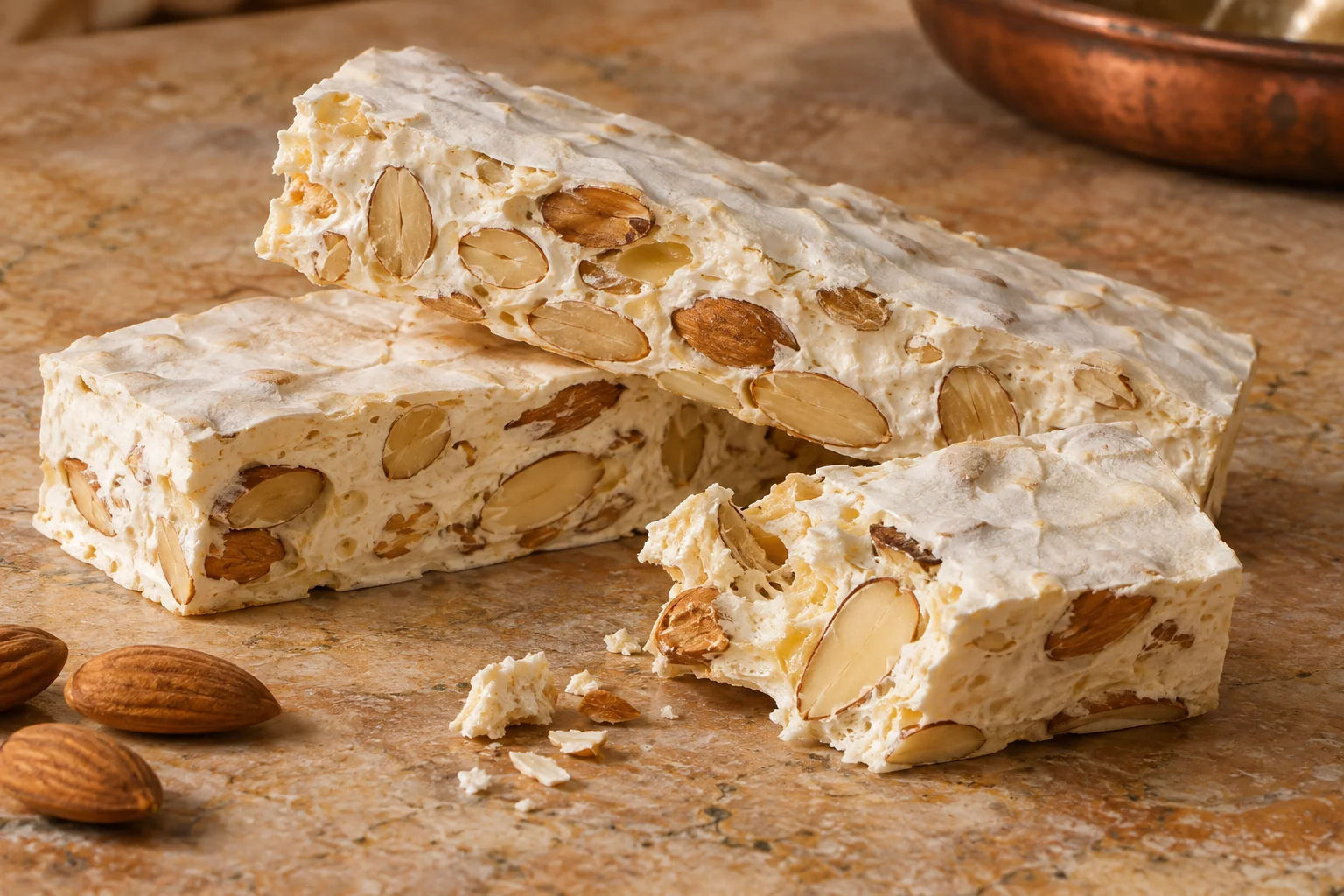
Honey, egg white and almonds become torrone after long mixing.
A Cremonese legend says confectioners shaped it like the Torrazzo for the 1441 wedding of Bianca Maria Visconti and Francesco Sforza. That is a story, not proof of who invented it. The city’s connection to the sweet is documented by the sixteenth century, when Cremona sent torrone as a Christmas gift to Spanish officials in Milan.
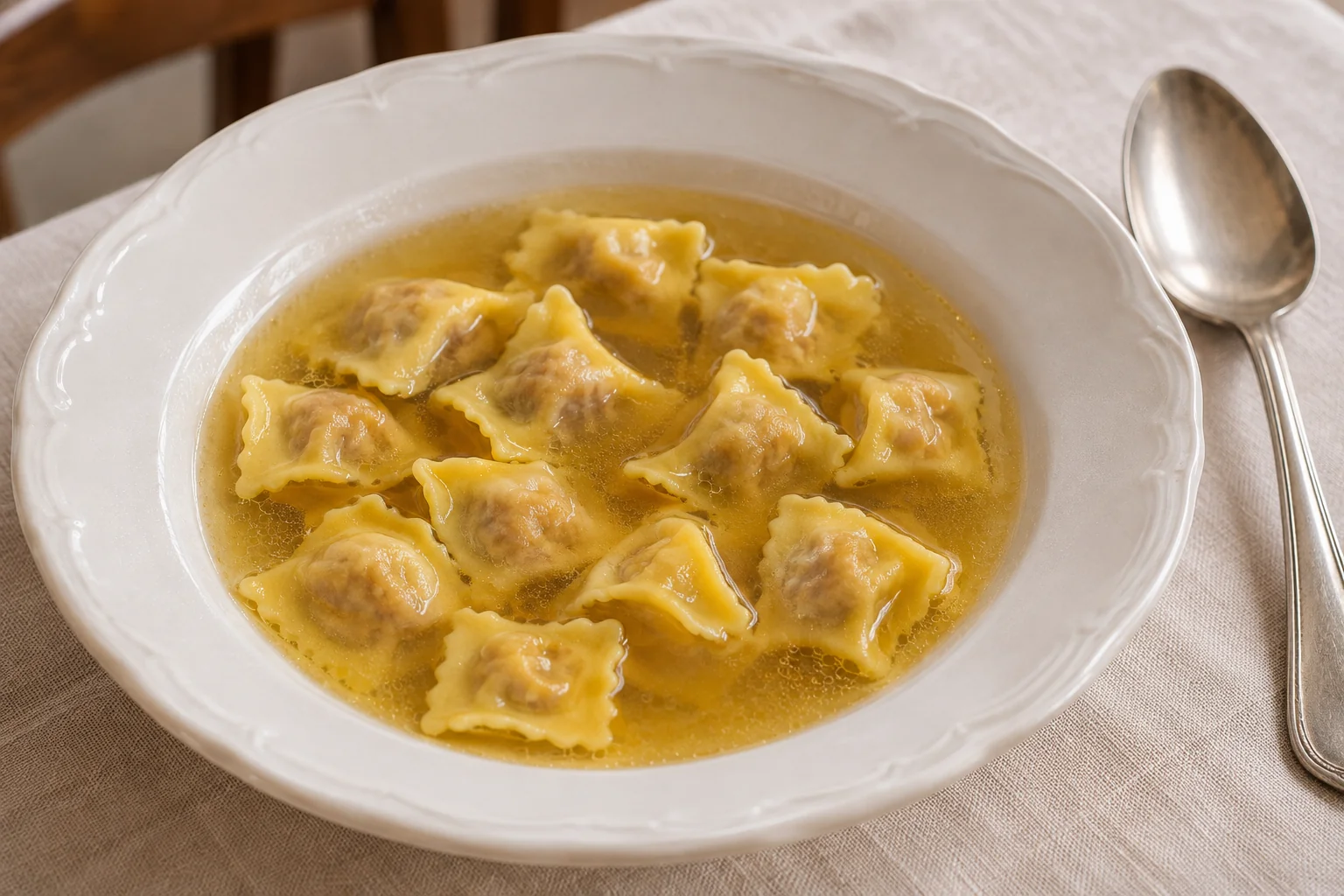
Marubini
These small stuffed pasta parcels bring meat, cheese and spices to the table.
They are served in the «three broths» of chicken, beef and pork: the broth is part of the recipe, not an afterthought. No single inventor is known. The tradition is traced to around the sixteenth century, and local culinary groups deposited a formal recipe in 2003 to preserve it.
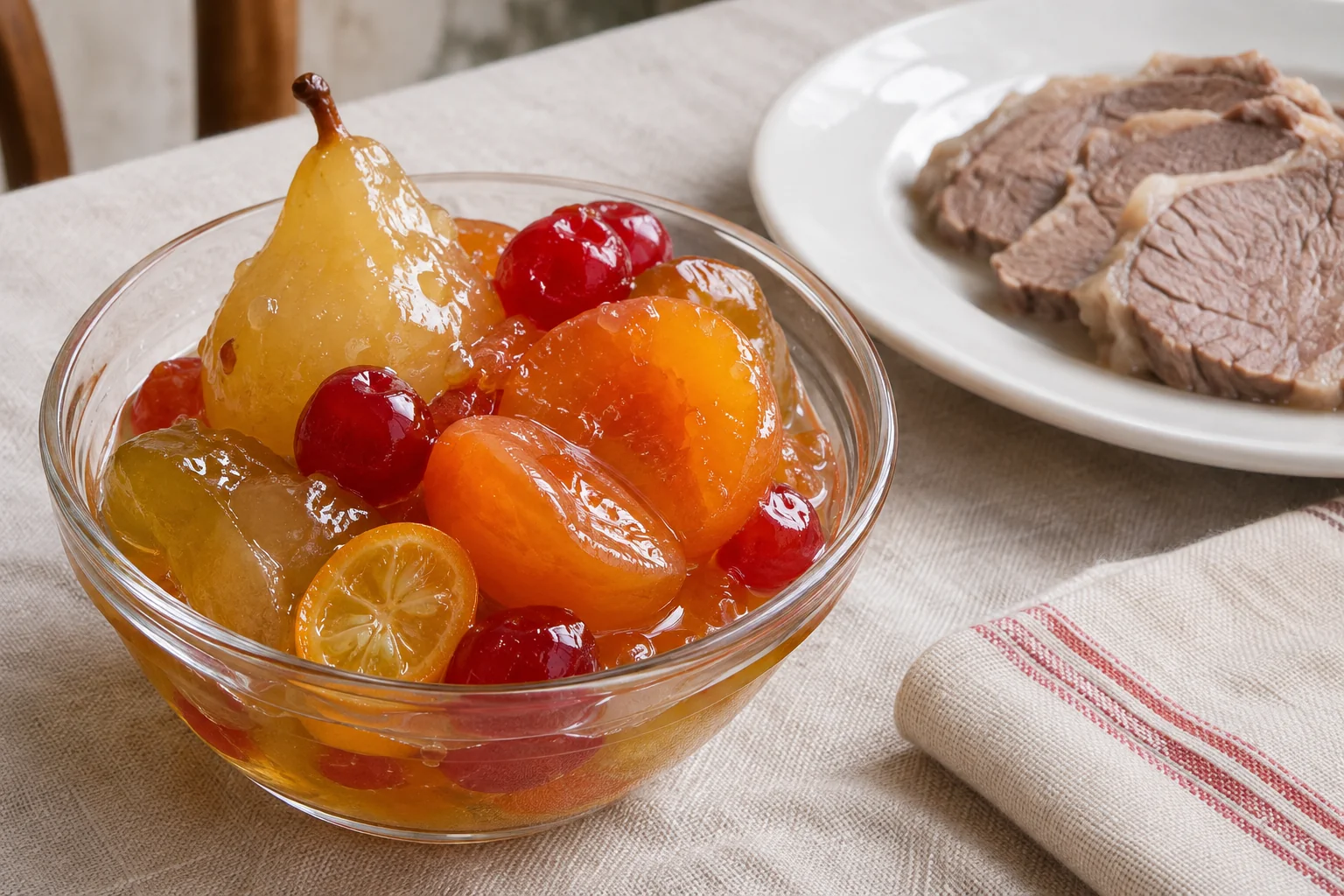
Mostarda cremonese
Cremona’s mostarda is not a yellow mustard sauce.
It is whole candied fruit with a sharp mustard note, often served beside boiled meat. Its inventor is unknown. A recipe called «Pour faire moustarde de Cremone» appeared in 1604, followed by a «Mostarda alla Cremonese» in 1666. Try a little with the meat to taste the sweet and pungent contrast.
Walking routes near Cremona
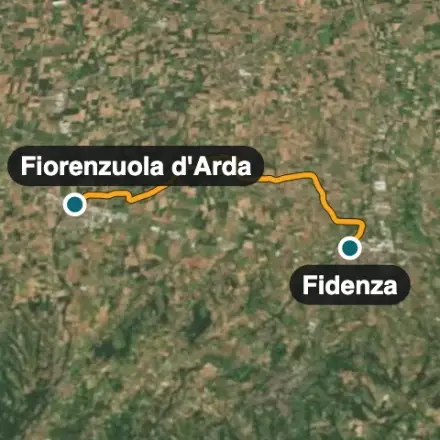
Via Francigena
Fiorenzuola d’Arda › Fidenza
The route does not pass through Cremona: reaching the stage requires a transfer.
In Appy, explore stages, maps and elevation to plan your day on foot.
One day in Cremona: a simple route
Start in Piazza del Comune: see the cathedral and Torrazzo, walk around the Baptistery, and find Hercules beneath the Loggia dei Militi.
Try marubini or boiled meat with mostarda for lunch, saving torrone for later. Spend the afternoon at the Museo del Violino and among the workshops. Check opening hours and tickets before choosing your return train.
Frequently asked questions
When is the Festa del Torrone?
The 2026 edition ran from 7 to 22 November. Check the organiser’s site for the next dates.
Where is it held?
In the historic centre of Cremona. In 2026 the stalls were between Piazza Stradivari, Via Gramsci and Cortile Federico II.
How much is the entrance fee?
Entry was free at the 2026 edition. Some workshops and tastings needed booking.
What are the opening hours?
In 2026 the stalls were open from 9 am to 8 pm.
Is it open at the weekend?
Yes. In 2026 it was open every day over three weekends, Saturdays and Sundays included.
Sources and credits · Checked on
Comune di Cremona: Centro storico · Cattedrale di Cremona: Torrazzo e orologio · Turismo Cremona: Festa del Torrone 2026 · Sky TG24: Festa del Torrone 2026 · Il Giorno: Festa del Torrone 2026 · Museo del Violino: Collezioni · Museo Archeologico: Cremona romana · Turismo Cremona: Cucina locale · Turismo Cremona: Storia della mostarda · Festa del Torrone: Organizzatore · IAT Castell’Arquato: Via Francigena piacentina · Cattedrale di Cremona: Storia e facciata del Duomo · Cattedrale di Cremona: Battistero · Comune di Cremona: Storia del Palazzo comunale · Lombardia Beni Culturali: Loggia dei Militi · UNESCO: Liuteria tradizionale cremonese